Where low-slope roofs hide on Washington houses
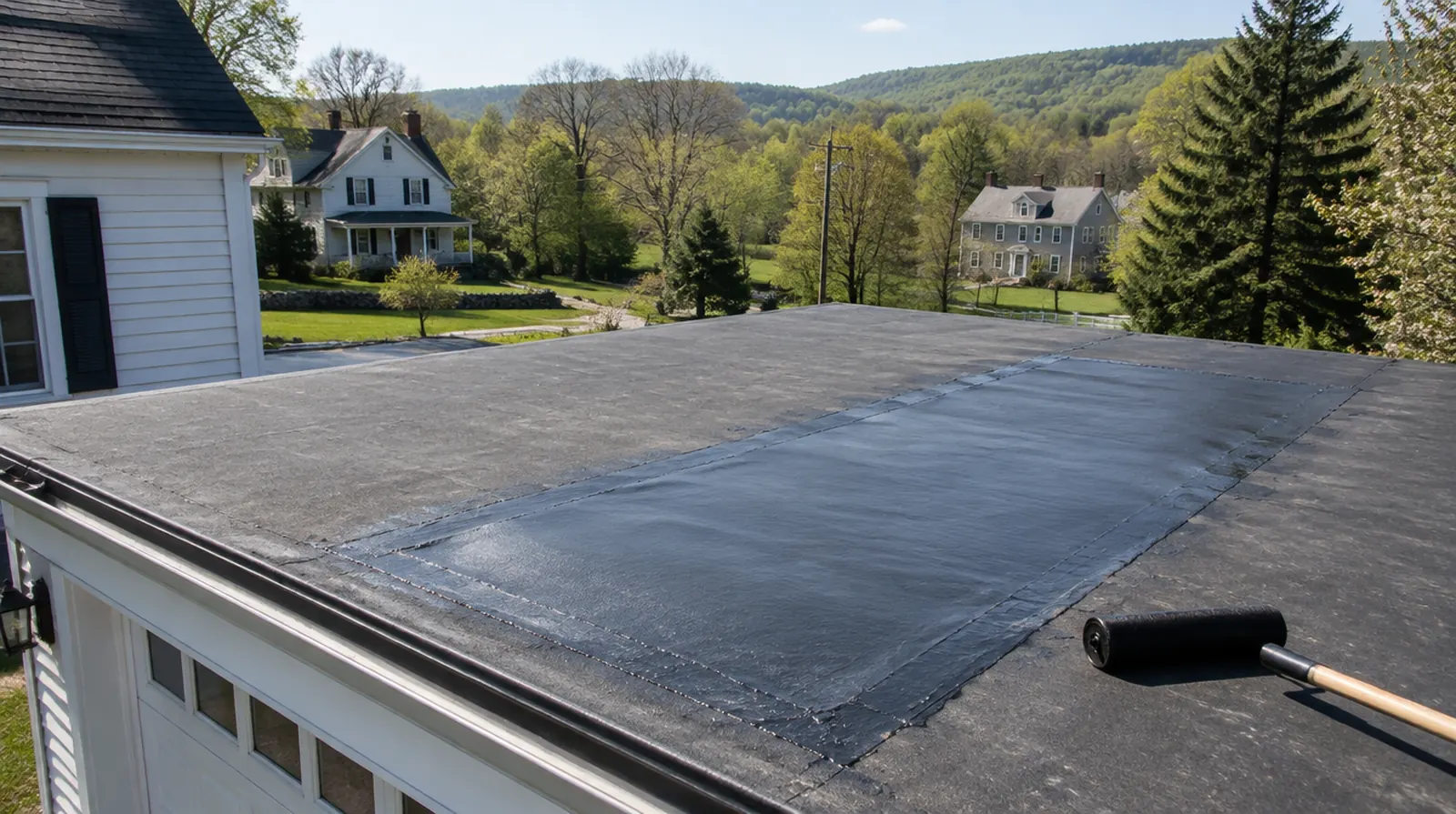
Very few homes in town are flat on top, but almost every older property has at least one section that barely pitches. Victorian porches along the side streets off Belvidere Avenue and Route 57 often carry a nearly level roof behind a decorative trim board. Back kitchens and mudrooms added in the 1940s and 1950s were framed with a gentle slope so they would tuck under a second-floor window. Out in the township, farmhouse additions, enclosed breezeways and the lean-to sections of old barns and garages follow the same pattern. Each of those roofs meets a taller wall somewhere, and that joint is where most of our repair calls start.
The materials vary as much as the framing. We find rolled asphalt roofing, rubber EPDM sheets, modified bitumen, old built-up tar and gravel, and plenty of spots where somebody painted silver coating over all of it. Knowing what is on the roof tells us how to repair it without making the next fix harder.
When a low-slope section needs attention
- Puddles that are still sitting two or three days after rain or melting snow.
- Bubbles, wrinkles or cracks spreading across the surface.
- A seam or old patch that has curled up at the edge.
- Stains on the ceiling of a porch, sunroom or rear addition.
- Metal at the wall or window sill that has pulled loose or rusted through.
How we repair a flat or low-slope roof
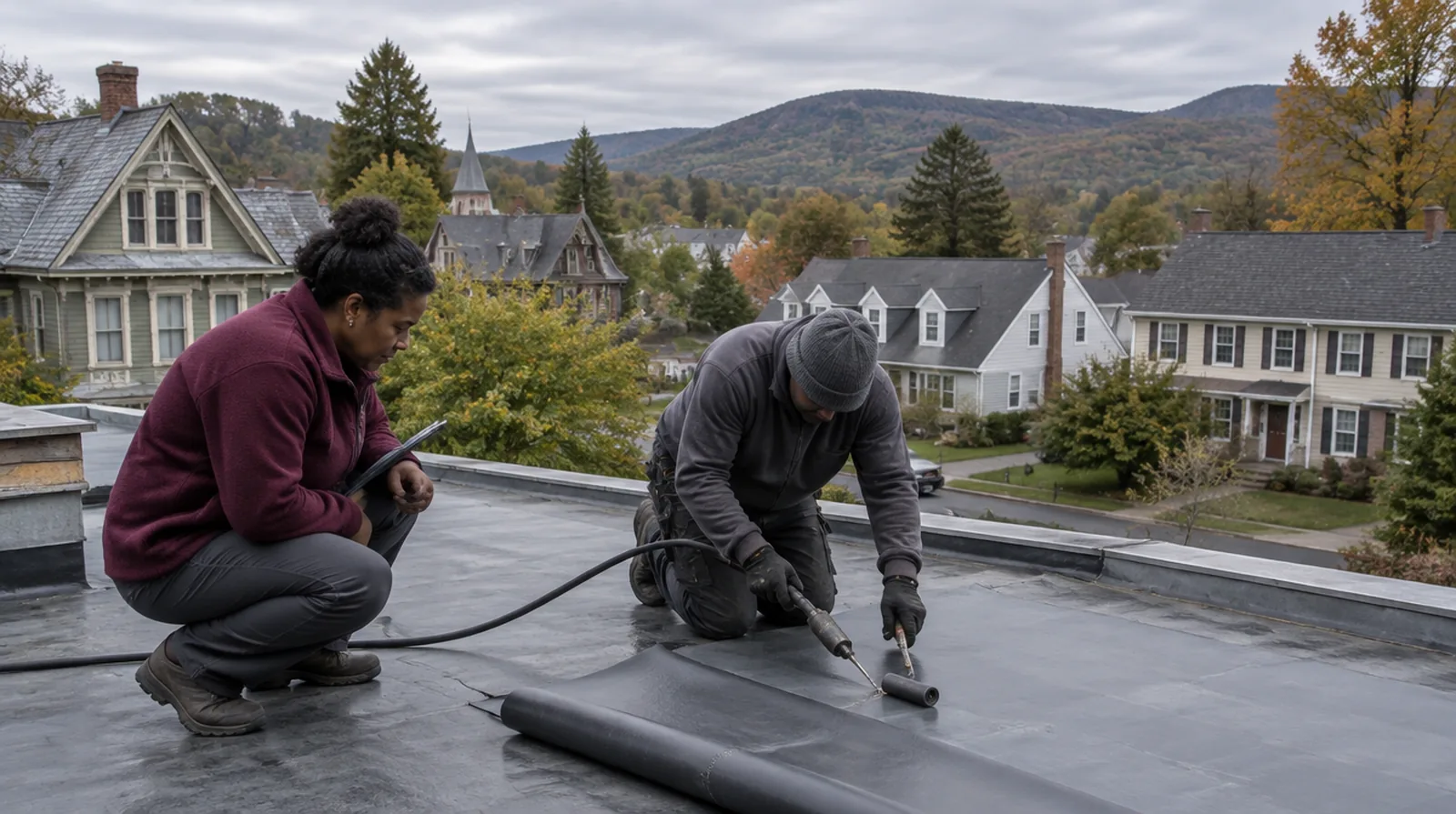
We sweep the surface clean first so nothing is hiding under leaves and grit. Then we look for the low spots where water collects, press along the seams to find spots that have let go, and check the wall flashing, the window sills above the roof and any scupper or drain outlet. If we can get into the space below, we look for wet framing and stained plaster that line up with what we saw on top.
Damaged membrane is cut back to material that is still bonded and dry. Wet insulation and soft decking come out and get replaced. The new patch or section is installed with the method that matches the existing roof, lapped generously and pressed or heat-welded into place. At the wall, we tuck new flashing up under the siding or into the mortar joint and cover it with counter flashing, so water running down the wall lands on top of the roof instead of behind it.
Why these roofs give out in Warren County weather
A pitched roof sheds snow, but a low roof holds it, and a heavy drift off the main roof can bury a porch roof for weeks in a cold stretch. As that snow melts on a sunny day and refreezes after dark, water sits right on the seams and works into any gap. Fallen leaves from big shade trees plug the outlet in the fall, so the first thaw has nowhere to go. In July and August, dark membranes bake in the sun, and older roll roofing gets brittle enough to crack when someone steps on it to clean a gutter.
What affects the price of a flat roof repair
- Type of roofing. Rubber, modified bitumen and old built-up roofs are each repaired differently.
- How far the water traveled. Wet insulation and rotten boards add material and labor.
- The wall connection. Rebuilding flashing under siding or into brick takes more time than a field patch.
- Getting there. A second-floor porch roof needs more ladder and staging setup than a one-story mudroom.
Patch it or recover it
If the leak comes from one seam or one tired corner and the rest of the membrane is flexible and tight to the deck, a repair is the sensible choice. When the surface is cracked everywhere, the deck is spongy in several places or there are layers of failed patches already, a new membrane over a repaired deck usually costs less over time. We show you both options with photos so you can decide.
Porch roofs on older borough homes
Victorian porch roofs carry a lot of trim, and their edges are often hidden behind built-up fascia and decorative molding. Water that gets past the edge rots the trim and the top of the porch posts before it ever reaches a ceiling. When we repair one of these roofs, we look at the drip edge and the trim boards too, and we point out any wood that is soft so a carpenter can address it alongside our work.
Keeping a low-slope roof dry between visits
Clear leaves off the surface and out of the drain or scupper after the trees drop in the fall. Try not to walk on the roof in hot weather, and never chip ice off with a shovel. A quick look from a second-floor window after big storms will show you puddles or torn edges early.
Flat roof repair FAQs
Can a low-slope roof be fixed in cold weather?
Some repairs can be made on dry days above freezing. When it is too cold for adhesives to bond, we put on a temporary seal and come back when it warms up.
Will silver coating stop my leak?
A coating can help a sound roof reflect heat, but it will not close an open seam or dry out wet insulation underneath.
Do you handle porch roofs on two-story houses?
Yes. Upper porch roofs and the low roofs under second-floor windows are some of the most common jobs we see in town.
Have a low-slope leak?
Call (908) 726-5646 for a free flat roof repair look.