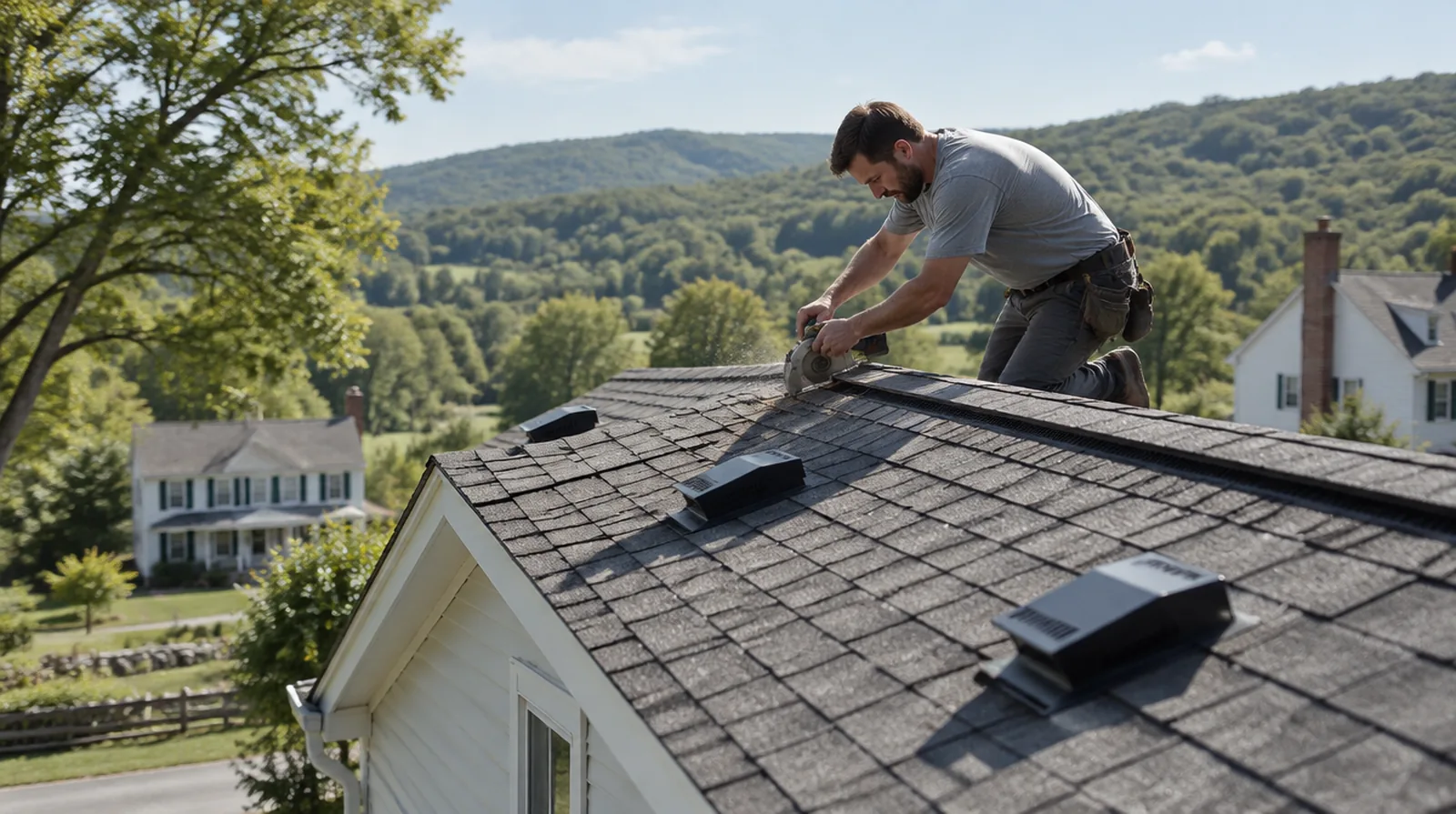
What roof ventilation work includes
A working attic vent system has two halves. Fresh air comes in low through soffit or eave vents, and warm, damp air leaves high through a ridge vent or other exhaust. We check both halves: whether the soffits are actually open or painted shut, whether insulation is stuffed into the eaves and blocking the path, and what kind of exhaust is on the roof now. Then we install or adjust vents and add baffles at the eaves so insulation stays put and air can flow up along the underside of the deck. Adding a continuous ridge vent during asphalt shingle work is often the cleanest way to get the exhaust side right.
Signs your attic is not venting well
- Upstairs rooms stay hot long after the sun goes down.
- Frost or water drops on the underside of the roof boards on cold mornings.
- Dark stains or mildew on the attic sheathing.
- Ice dams forming along the gutters every winter.
- Shingles aging faster than expected, especially on the sunny side.
How we improve attic airflow
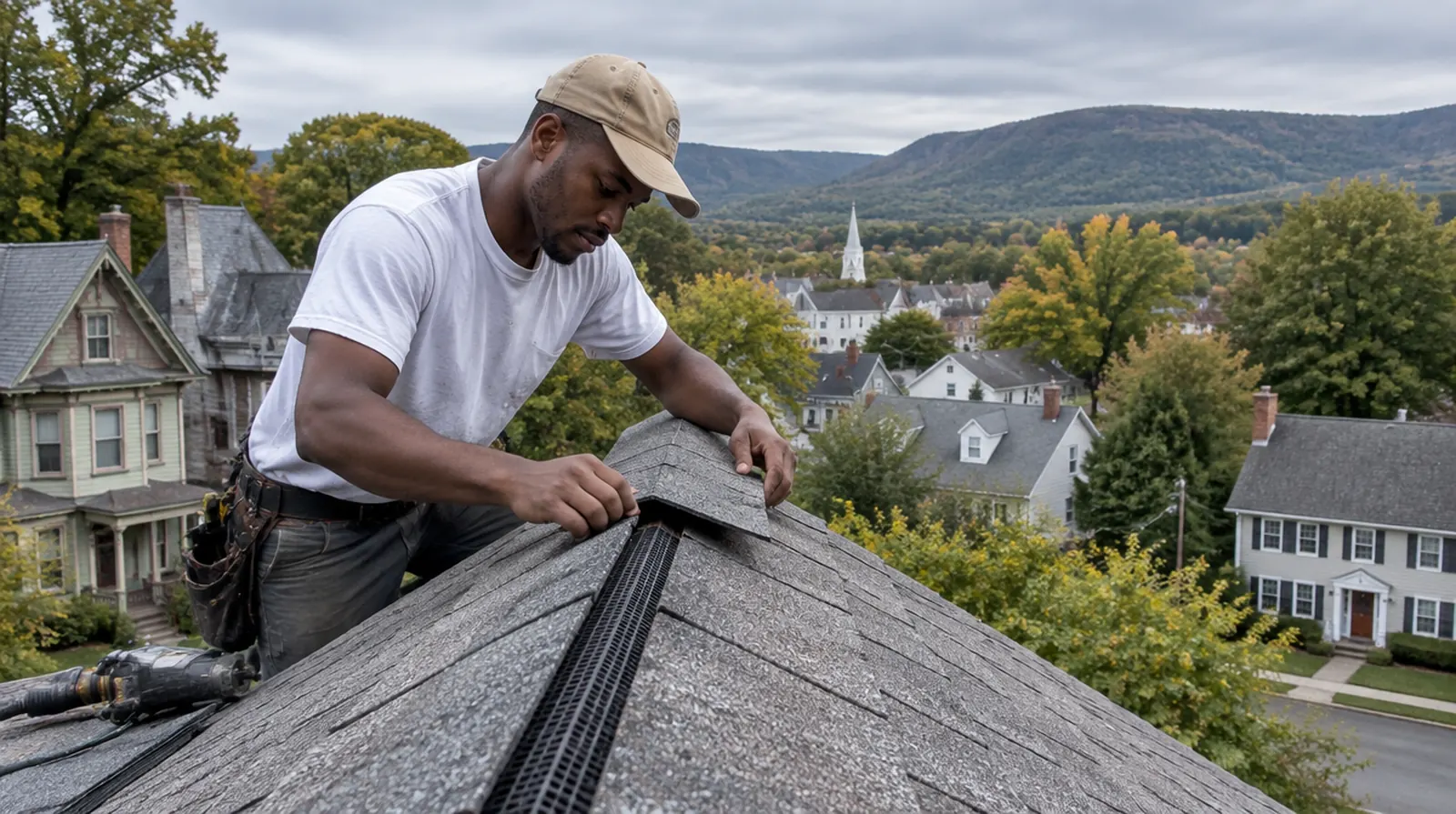
We start in the attic with a flashlight, looking at the eaves to see whether daylight comes in, how deep the insulation is and whether bath fans or a dryer vent are dumping moist air into the space. Outside, we check the soffits, the type and number of roof vents and the length of the ridge. From there we make a plan. That can be as simple as clearing soffits and adding baffles, or it can mean cutting a slot along the ridge, closing up old box vents and installing a continuous ridge vent so the exhaust matches the intake. Bath fan ducts get routed outside instead of ending in the attic.
Why ventilation matters through northwest Jersey seasons
Washington gets both ends of the thermometer. On summer afternoons, sun on a dark roof heats the attic far above the outdoor temperature, and that heat bakes the shingles from below and leaks down into bedrooms. In winter the problem flips. Warm, moist air from the house rises into a cold attic, condenses on the roof boards and can drip back onto insulation. Warm attic air also melts snow from below, which refreezes at the eaves and builds ice dams. A balanced system keeps the attic closer to outdoor temperature in both seasons, which protects the roof and the framing.
What affects the cost of ventilation work
- Ridge length and roof shape. Hip roofs and short ridges need a different exhaust plan.
- Soffit condition. Closed or painted-over soffits may need new vented panels.
- Insulation and baffles. Clearing blocked eaves adds labor.
- Timing. Doing it with a new roof costs less than a separate project.
Balance beats more vents
Cutting extra holes in a roof is not the same as fixing ventilation. If an attic has strong exhaust but no intake, it can pull heated air out of the living space below. Mixing ridge vents with gable fans or box vents can also short-circuit the airflow. We aim for even intake and exhaust, with one type of exhaust working the whole attic.
Venting older houses and finished attics
Many borough Victorians and farmhouses have finished third floors, knee walls or cathedral ceilings with very little space between the plaster and the roof. Those areas are harder to vent, and sometimes the fix involves the insulation as much as the vents. We look at what is realistic for your house and explain the tradeoffs before recommending work.
Roof ventilation FAQs
Should I keep my gable or turbine vents with a ridge vent?
Usually not. Mixed exhaust types can work against each other, so we often close old vents when a ridge vent goes in.
Will ventilation stop ice dams?
It helps a lot, along with air sealing and insulation. Active leaks still need leak repair at the spot where water gets in.
Can ventilation be added without a new roof?
Yes. A ridge vent can be cut into an existing roof if the shingles are in good condition, and soffit and baffle work happens from below.
Want the attic to breathe?
Call (908) 726-5646 for a roof ventilation look and estimate.