What leak repair means for your house
Leak repair is detective work first and roofing second. Water that slips past a cracked vent boot or loose chimney flashing rarely drops straight down. It runs along the underside of the deck, follows a rafter or a nail, and soaks into insulation before it finally shows up on drywall or plaster. On the tall, steep roofs of older borough houses, that path can be long. Our job is to follow it back, find the opening and close it properly.
When to call about a leak
- Water dripping from a ceiling, light fixture or window frame during a storm.
- A ceiling stain that gets bigger after each rain or thaw.
- Damp insulation or a musty smell in the attic.
- Water running down the inside of a chimney chase or around a skylight.
- Daylight showing through the roof around a pipe or vent.
How we track down and stop a leak
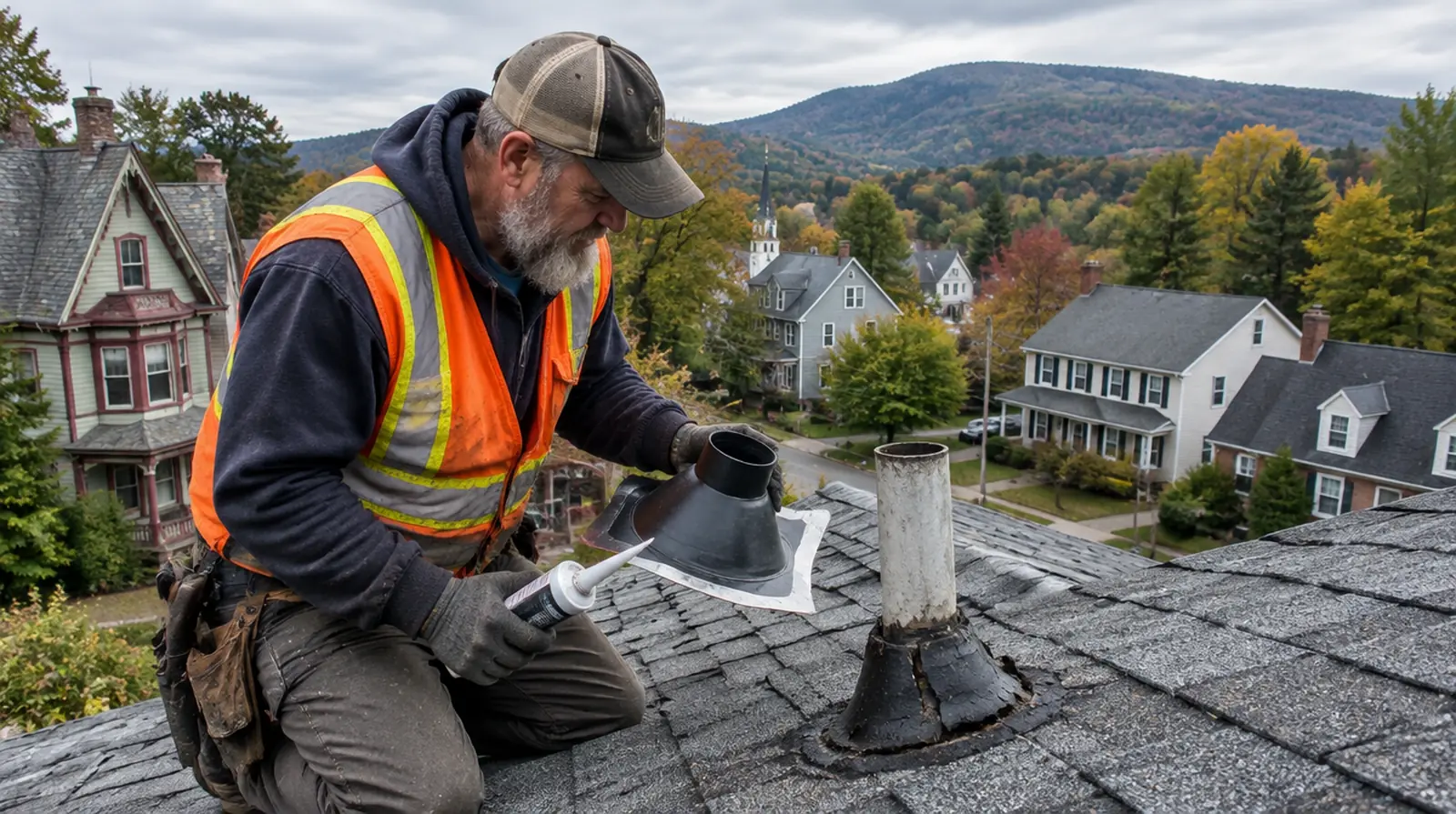
We start inside. We look at the stain, ask when it appears and whether it follows wind from a certain direction, snowmelt or every hard rain. If the attic is reachable, we follow water marks on the rafters and deck boards up toward the source. Then we go on the roof above that area and check the usual suspects: pipe boots, chimney step and counter flashing, valley metal, skylight curbs, dormer walls and nail pops. When the cause is not obvious, we may run water on one section at a time while someone watches inside.
Once we find it, we fix the cause itself. That can mean a new pipe boot, rebuilt flashing cut into the chimney mortar, replacement shingles over a valley or new decking under a soft spot. If water has been getting in for a while, we point out wet insulation and stained framing so you can dry or replace them before mold starts.
Why leaks show up after winter in Washington
Late winter is leak season here. Snow sits on north slopes and in valleys for days, warm attic air melts it from below and the water refreezes at the cold overhang. That ice ridge holds back the next melt, which backs up under shingles and finds any weak spot. Chimneys on older homes are another common source, because years of freeze and thaw loosen the mortar that held the old flashing. Summer storms that blow in over the ridges can drive rain sideways under siding and sidewall flashing, so some leaks only appear with wind from one direction.
What drives the cost of a leak repair
- Finding the source. A simple boot swap takes less time than tracing water along a long attic.
- Roof height and pitch. Steep or three-story roofs need more setup for safe access.
- Hidden damage. Soft decking or rotten trim around the opening adds materials.
- Complex details. Chimneys, skylights and dormer walls take more flashing work.
Covering a leak now and fixing it right
Sometimes a storm is coming and the roof cannot be repaired properly that day. In that case we can put down a temporary cover to slow the water, then return to make the permanent repair once conditions allow. A tarp is only a stopgap. If we find that the leak is one of many weak spots across the field of shingles, the job may move into broader roof repair, and we will explain why before any extra work begins.
Leaks around chimneys on older homes
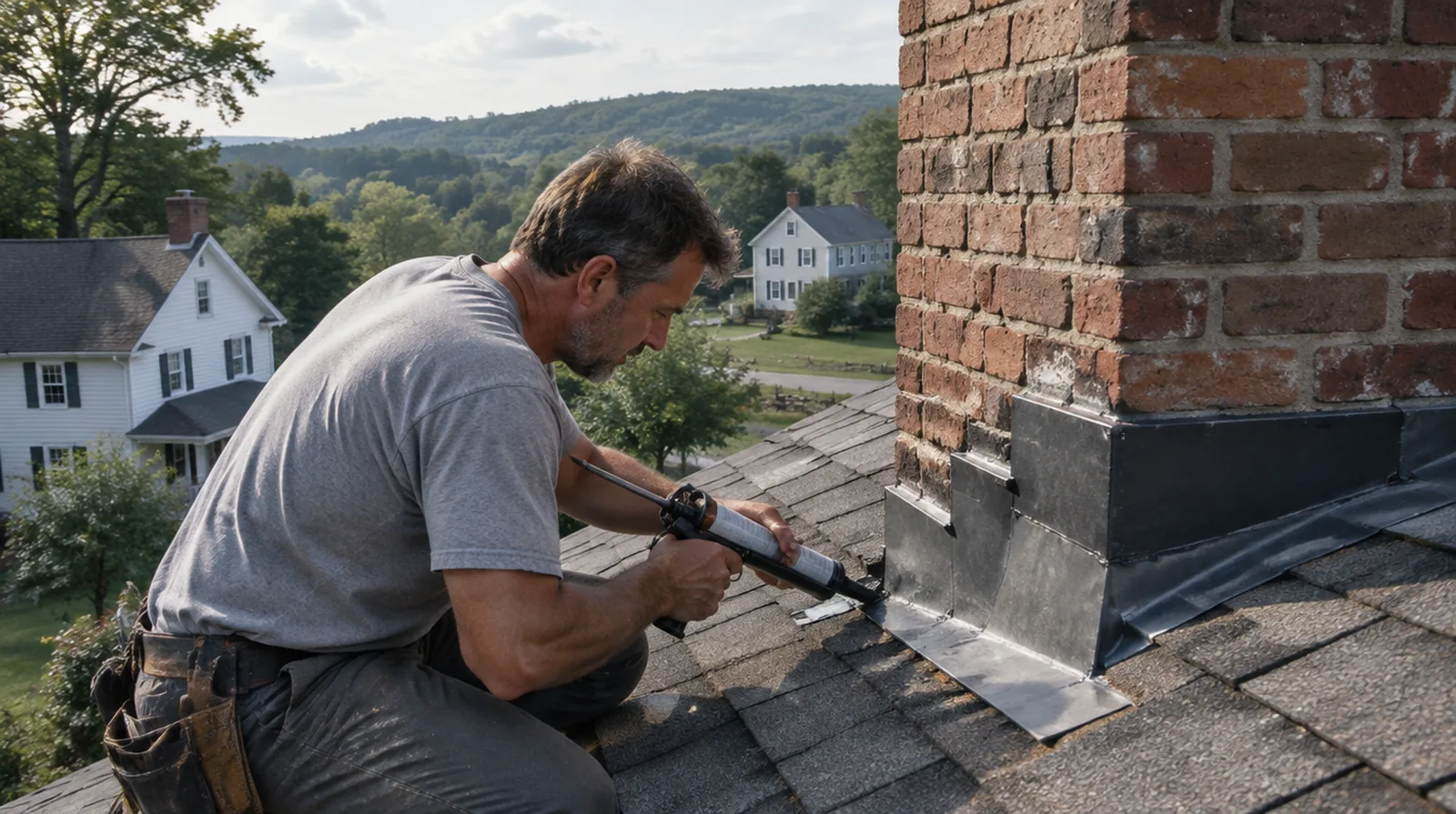
Brick chimneys on Victorian and early 1900s houses in town were often flashed with lead or copper that has since been covered with tar, caulk or aluminum. Those quick fixes crack within a season or two. We remove the old patchwork, install new step flashing under each course of shingles and cut counter flashing into the mortar, which keeps water out far longer than a smear of sealant.
Roof leak repair FAQs
Why does my ceiling only leak in some storms?
Wind direction, heavy downpours and snowmelt each test different parts of the roof. A leak that appears only with a certain wind often points to sidewall or chimney flashing.
Can a leak be fixed from inside the attic?
Not for long. Sealant applied from below does not stop water entering from above, so the outside opening has to be closed.
Do I need to replace wet insulation?
If it stays damp or smells musty, yes. Wet insulation loses much of its value and holds moisture against the wood.
Have an active roof leak?
Call (908) 726-5646 and tell us what you are seeing. We will set a time to trace it.