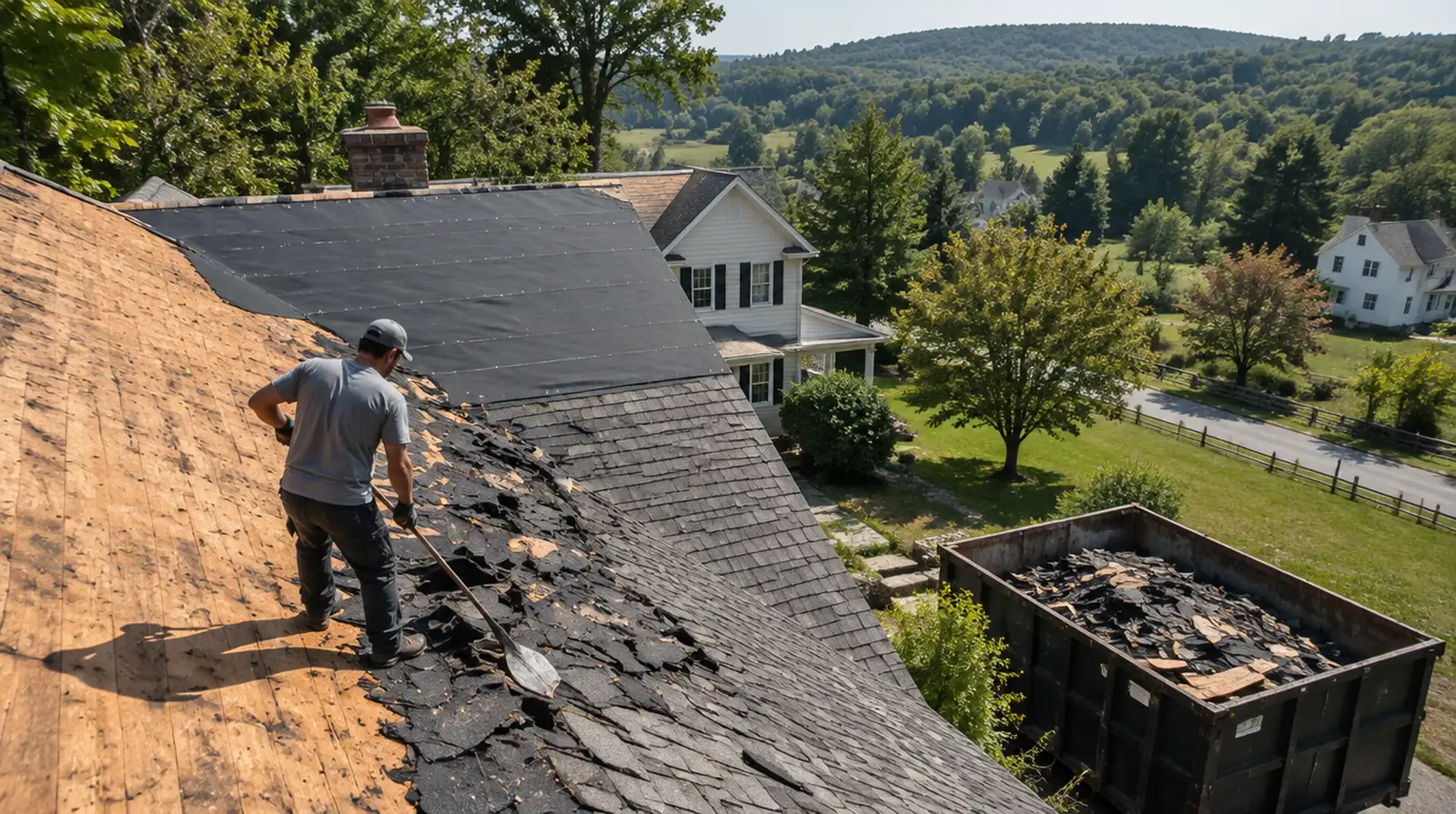
What a full roof replacement includes
A replacement is a complete rebuild of the roof covering. We strip every old layer down to the sheathing, inspect and repair the deck, then install a new system: drip edge, self-adhering ice barrier along the eaves and in the valleys, synthetic underlayment across the field, new step and counter flashing at walls and chimneys, new pipe boots, the shingles themselves and a ridge vent or other exhaust matched to the intake at your soffits.
On older Washington homes, a replacement is also the best chance to fix problems that have been hiding for decades: plank sheathing with gaps, rafters that were notched for old vents, slate or cedar hidden under asphalt, and chimneys that were sealed with tar instead of real flashing.
Our replacement process
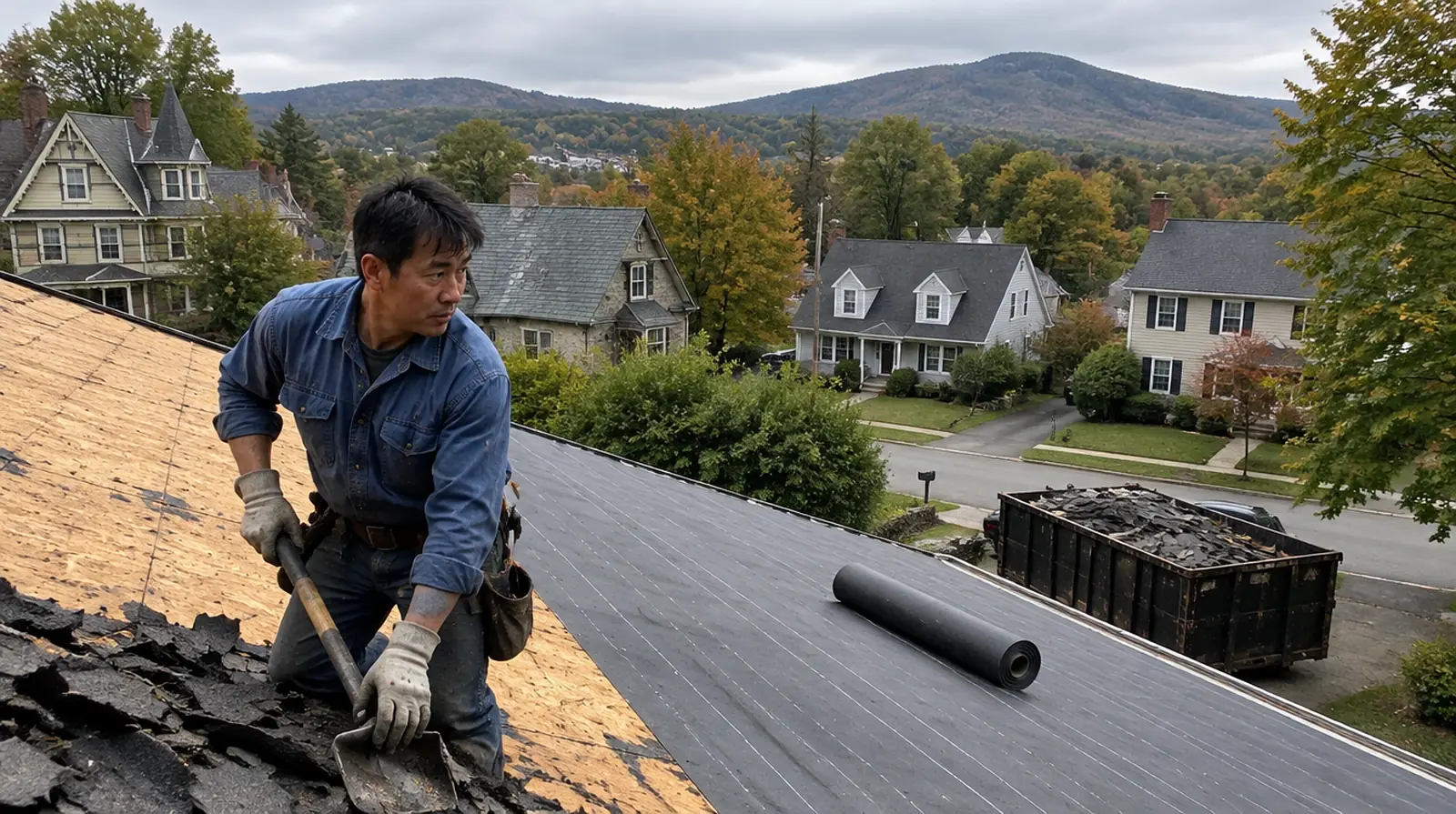
Inspection and estimate. We measure every slope, count layers at the edges, look at the attic and check how the roof is ventilated. Your written estimate lists each part of the system, the shingle line you choose and an allowance for deck repair so you know what happens if we find rot.
Scheduling and setup. We line up any paperwork the local construction office needs, order materials and plan dumpster placement. On tight borough lots, that may mean coordinating with neighbors about a shared drive.
Tear-off and deck work. We remove the old roof one section at a time, swap out damaged boards and add plywood where plank sheathing is too rough to nail into.
Installation. Ice barrier, underlayment, flashing and shingles go on in order, and each section is closed before the end of the day. Rain in the forecast means we open less roof, not more.
Cleanup and walkthrough. Nails are swept with magnets, the dumpster leaves, and we walk the roof with you and leave you with photos and product details.
When to replace instead of repair
- The roof is 20 or more years old and shingles are brittle, curled or bare of granules.
- Leaks keep showing up in different places.
- The deck feels soft or looks wavy from the street.
- There are already two or more layers of roofing.
- Ice dams return every winter despite repairs.
Built for snow, ice and freeze-thaw
Washington gets real winter. Snow sits on north-facing slopes, warm attics melt it, and water refreezes at the cold eaves. We run ice barrier up from the eaves past the inside wall line and line every valley with it, so meltwater that backs up has a sealed surface underneath. Good intake and exhaust ventilation keeps the deck closer to outdoor temperature, which cuts down on that melt-and-freeze cycle in the first place. Shingles are nailed to the manufacturer's high-wind pattern to hold up when summer storms push through the valley.
Replacement cost factors
- Roof area and pitch. Steep Victorian roofs take more labor and safety gear than a low ranch.
- Number of layers. Each extra layer, especially slate, adds tear-off time and disposal weight.
- Deck repairs. Rotted planks or a full plywood overlay add materials.
- Details. Dormers, chimneys, skylights and valleys all need custom flashing.
- Shingle choice. Architectural shingles cost more than basic three-tab but last longer and handle wind better.
Replacing roofs on older borough homes
Houses near downtown were built before modern roofing standards. Many have rafters spaced irregularly, boards instead of sheet goods and chimneys that lean slightly from decades of settling. We plan for that. Sometimes we add a plywood layer over the planks to give shingles a flat base, and we rebuild chimney flashing so it is tied into the masonry. Porches and bays with their own low roofs are included in the plan so they do not become the weak link.
Plan ahead with an inspection
Not sure if your roof is ready for replacement? A roof inspection gives you a clear report on remaining life, so you can budget instead of reacting to a leak.
Roof replacement questions
How long does a replacement take?
Most homes take one to three days. Larger or steeper roofs and slate tear-offs can take longer.
Do I need to be home?
Not the whole time. We like to walk the job with you at the start and the finish.
Will my yard be a mess?
We tarp plants and cover the ground near the house, then sweep for nails with magnets at the end of each day.
What shingles do you use?
Mostly architectural asphalt shingles from major manufacturers, installed with matching starter, hip and ridge pieces.
Planning a roof replacement?
Call (908) 726-5646 for a free on-roof estimate and a written scope.